
On keeping
How to save a loved one's voicemail and voice
Part of: How to preserve family stories, voices, and everyday memories
There’s a line in a song I wrote that I have never been able to sing casually:
“Forty-seven seconds out of seventy-eight years — that’s all I saved. I almost deleted it to make room on my phone.”
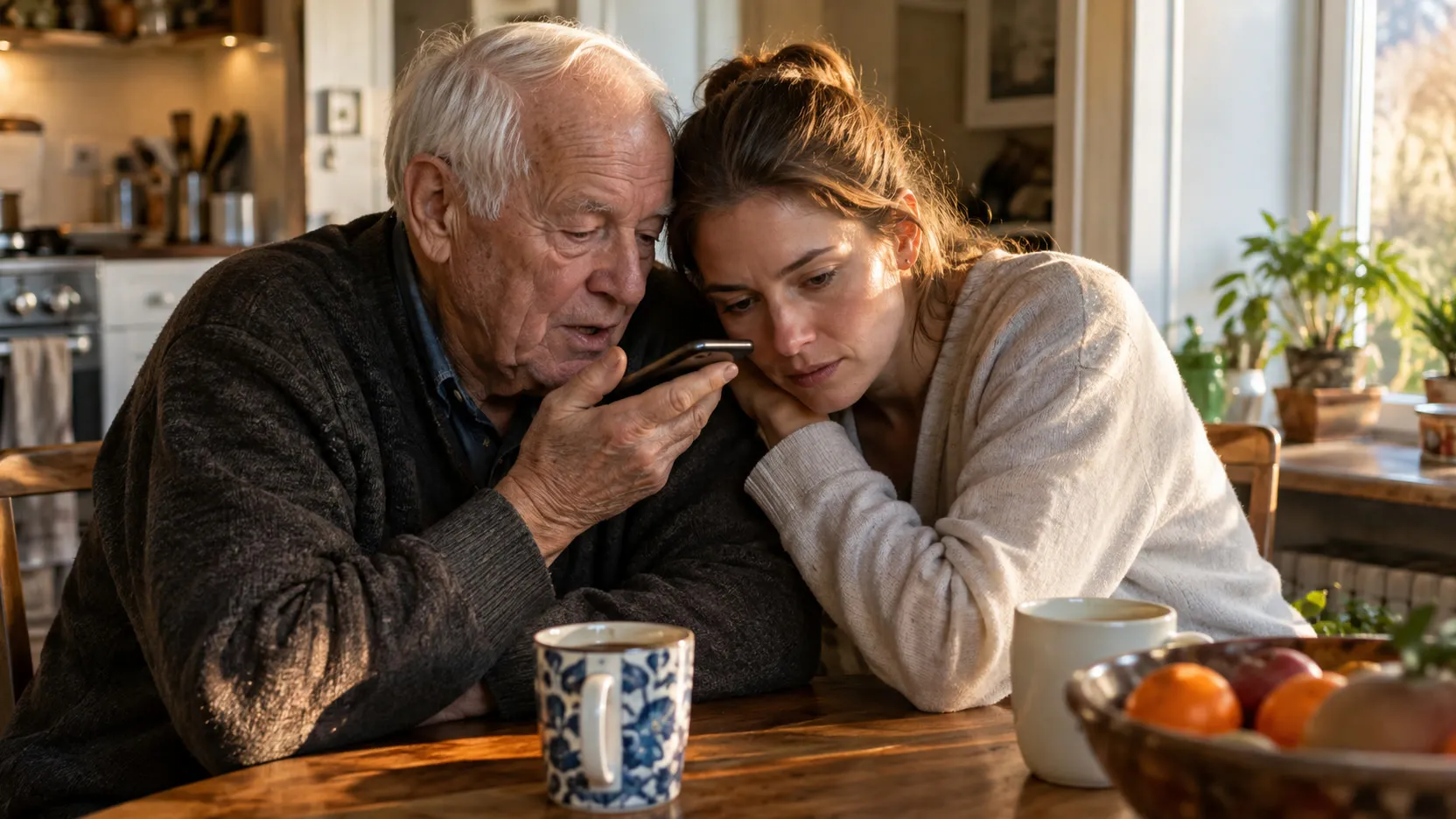
A voicemail can hold something a photograph can’t: the way she says your name, the pause before he laughs, the ordinary sound of someone calling to see whether you got home. I want us to keep more of that. Start by saving the audio file somewhere outside the voicemail app, then make a second copy you can open independently.
If someone you loved is already gone and you didn’t press record, you were not careless. Nobody hands us a checklist for loving people. You have my whole heart, and none of my judgment.
If you do have a recording, here’s how to give it a little more protection.
How to save a voicemail from an iPhone
Apple’s voicemail guide explains how to open and share a message. The path depends on your Phone app layout:
- Open Phone. In the classic layout, tap Voicemail. In the unified layout, tap Calls, then use the filter to show Voicemails.
- Open the message and play it to make sure it’s the one you want.
- Tap Share. Choose Save to Files if it appears, or another available destination that lets you keep the audio file. Choose a folder you can find again.
- Open the saved file from that destination and listen through to the end. A transcript or screenshot preserves the words; keep the audio too, for the voice.
- Give the copy a useful name, such as
Grandma-voicemail-2026-10-16, using the message’s actual date if you know it. Add a short note about who is speaking and why you kept it.
These steps describe Apple’s built-in Phone app. If your carrier uses another app, or you call a number to hear messages and have no Share button, ask the carrier how to export the recording before changing service or deleting anything.
Apple says carriers may erase messages that aren’t stored in iCloud, and changing a SIM card may also delete voice messages. That doesn’t give every voicemail a fixed expiry date. It is a reason to make a separate copy while you can.
Make a second copy, then check it
Keep the saved audio in two separate places: for example, on your computer and on an external drive, or on your computer and in a private cloud account you control. Two folders on the same phone won’t help if that phone is lost.
Open each copy and check that it plays. If you choose cloud storage, confirm that you can sign in and download the file. Keep the original message while you check the copies.
A file named after a person is easier to find than an attachment buried in a conversation. A sentence beside it — “She called after my first day at work” — gives someone else a way into the moment.
Record another ordinary moment, with permission
If the person you’re thinking of still answers the phone, ask whether they’d like to make a recording together. Say what you want to keep and who will be able to hear it. Let them decline, pause, or leave a story out.
For a conversation in person, the recorder on your phone is enough to begin. Make a short sample, play it back together, and adjust the distance before you settle in. Apple also explains how to export a Voice Memos recording to Files: select the recording, open More, choose Share, then Save to Files.
You don’t need to ask for a whole life story. These ten questions worth asking your grandmother offer a place to start. Or ask for the story everyone has heard before. The familiar laugh belongs in the record too.
A short video at dinner can keep hands, expressions, and interruptions alongside the voice. Ask before filming, and agree before sharing. An ordinary moment can stay ordinary even when everyone knows the camera is on.
You can begin with what you already have
You don’t need UNA to save a voicemail or record a conversation. UNA’s family spaces are future previews; use a recorder and storage you control today.
For help choosing what to keep and where it belongs, make a small preservation plan. If you’re thinking about why the original recording matters, The voice, not a ghost is about keeping a real voice and the person behind it.
One message, saved and checked, is a good place to begin.