
On keeping
Signed with an X
Part of: How to preserve family stories, voices, and everyday memories
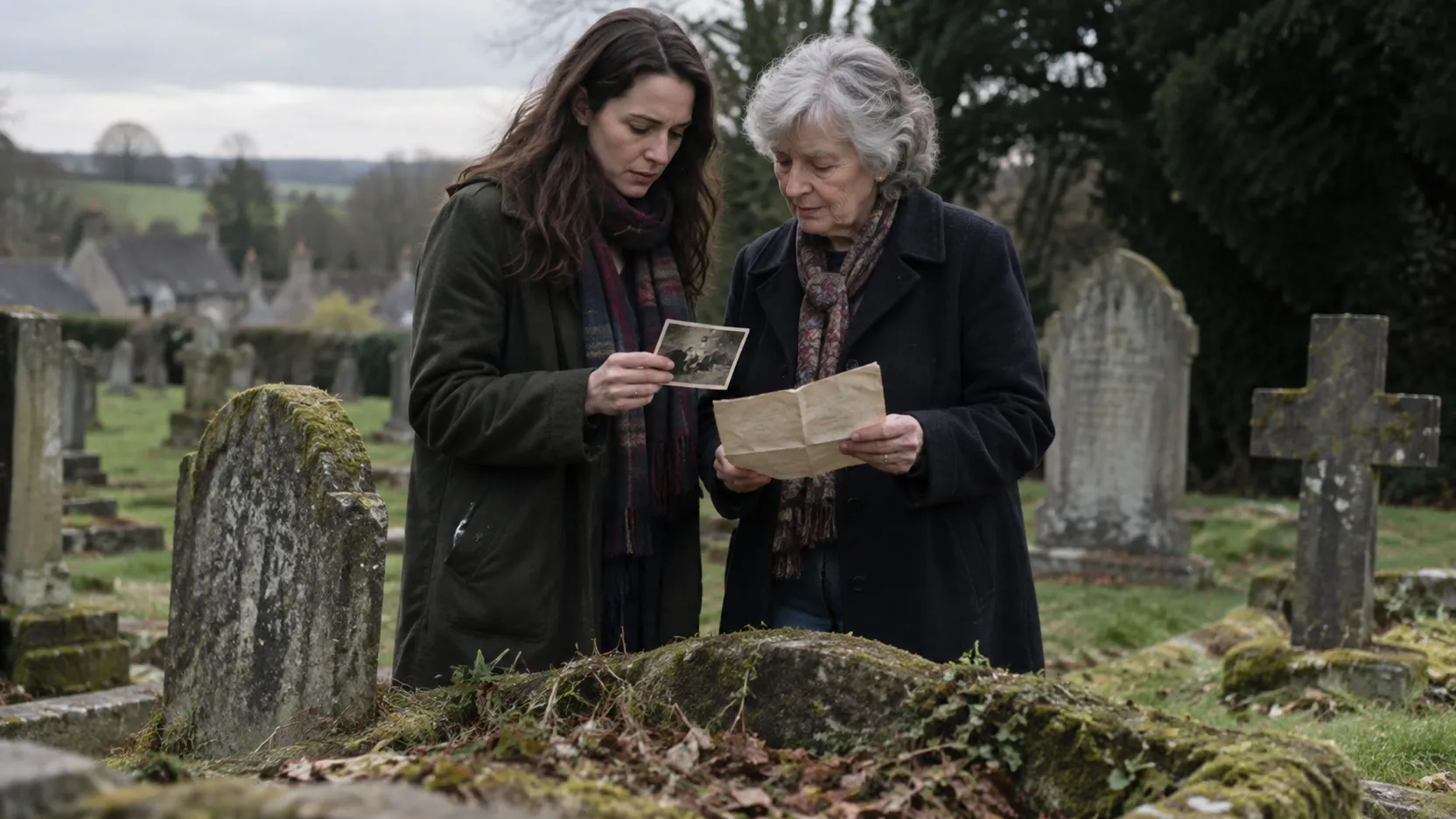
In 1853, at St. Mary’s Church in Loughborough, England, Thomas Cunningham married Mary Franks. He had come from County Galway, one of the millions whom Ireland’s Great Hunger sent looking for a way to survive; she had been his neighbor. Neither of them could read or write. They each signed the marriage record with an X.
Almost everything known about them after that was written by someone else. A son, John, who died as a toddler. A daughter, Mary Ann. Mary’s death in 1858. Thomas’s tuberculosis, and his death a few years later, when Mary Ann was seven. Two burials in unmarked paupers’ graves in the town cemetery. No stone, no names.
Orphaned at seven, Mary Ann found The Church of Jesus Christ of Latter-day Saints, was baptized at eleven, and in 1873 reached the Salt Lake Valley. She is a great-grandmother of Sister Susan Gong. Her parents stayed where they had been laid, unmarked, for more than 150 years.
How they were found
In a workshop video released in June 2026 about faith in an age of AI, Elder Gerrit W. Gong of the Quorum of the Twelve Apostles tells how the family finally found them. He needs three sentences:
“An inspired genealogist helped us to locate those graves. He used state-of-the-art computer-assisted tools. He also searched the cemetery the good old-fashioned way by checking graves one by one.”
Then the family went to Loughborough. They set a granite headstone, dedicated the graves, and stood together in a family circle where Thomas and Mary lie.
I keep returning to those three sentences because they hold the whole present tense of family history: the tools, the walk, and one limit that neither of them can get past.
The tools
The first half is real, and it’s becoming remarkable. FamilySearch holds billions of digitized historical records, and only a small portion of them have ever been indexed. It now uses AI handwriting recognition to turn those page images into searchable text, so a name in a register nobody has indexed can still turn up in a search.
Elder Gong welcomes this without hedging. “Computer-assisted tools can help connect us with family, past and present,” he says. And then a line anyone who has done this work will recognize: “I love that we may feel alone in the world until family history and genealogy deeply connect us with family we may have never known.”
The walk
The second half is the part I would have left out if I were telling the story, and it’s the part he made sure to include. The tools narrowed the search. A person closed it, walking the rows, reading worn stones, noticing the ground where no stone stood.
And no one went to Loughborough for information. By the time the family stood in that circle, they already had the facts. They went to be there. It’s the pattern of his whole workshop. The tools can “plan activities, translate messages, organize our schedule,” he says. “But then let us spend our best energy with people.”
The limit
Here is the limit. Every tool in that search could find only what someone had written down, and almost nothing about Thomas and Mary was written by Thomas and Mary. A register line with two X’s. A burial entry. The poor of their century left records that clerks wrote about them.
Those records were enough to find where they lie. They will never say what Thomas remembered of Galway, what Mary hoped for her daughter, whether they were afraid, or what made them laugh. No search will ever turn those things up, because they were never on any page. Thomas and Mary couldn’t put them there. That wasn’t a failing. It was their century.
Elder Gong has written about that day in Loughborough in his book The Shepherd and the Lamb, and he gives the doctrine underneath it. In the eyes of the world, people like Thomas and Mary may seem “of little notice or worth.” But, he writes, “we are not unvalued or unknown or forgotten in the heart of the Lamb of God.”
God never lost track of Thomas and Mary. Their family did. The record was never for Him. It’s for us.
Someone will search for you
We are among the first generations in history for whom the Cunninghams’ limit barely applies. Nearly all of us can write. Most of us carry a recorder in our pocket. Yet if you look honestly at what a descendant could find about you today, it may look a lot like their register line: plenty written about you (forms, accounts, a scattering of photos other people took), and almost nothing written by you.
The search tools will keep getting better. One day someone who loves you will point them at your name. I’d like them to find more than a line.
Sign your name
At RootsTech in 2023, Elder and Sister Gong offered families six ideas for carrying the work forward. The first two were “Capture your own story” and “Help capture the stories of loved ones.” Notice the order. Your own story comes first.
So here is a small version of it, and all it takes is a pen. Tonight, write one paragraph about the day you actually had, the kind of day no clerk would ever record: where you were, who you talked to, what worried you, what made you laugh. Date it. Then sign your whole name at the bottom. Not an X.
Sometime this month, ask one person you love a question about their life, and keep the answer in their own words. Ten good questions are a fine place to start.
Where it lives matters less than that it exists, though it’s worth knowing which records belong in the family museum and which belong on the nightstand. UNA is the private place I built for this kind of keeping; a notebook in a drawer does the job too. It’s the whole idea behind the record of the living. The tree can hold the names. Only the living can leave the rest.
Thomas and Mary Cunningham waited more than a century and a half for a stone with their names on it. It took a genealogist, a computer, a patient walk through the rows, and a family who cared enough to cross an ocean. They deserved every bit of it.
Your great-grandchildren shouldn’t have to search that hard to find you.
UNA is an independent project — made by one member, for members — and is not built, reviewed, or endorsed by The Church of Jesus Christ of Latter-day Saints. Quotes are from public teachings, shared with reverence; they are not endorsements. The workshop is on the Church’s YouTube channel, with a full transcript from the Church Newsroom.