
Faith & technology
The candle in the lit room
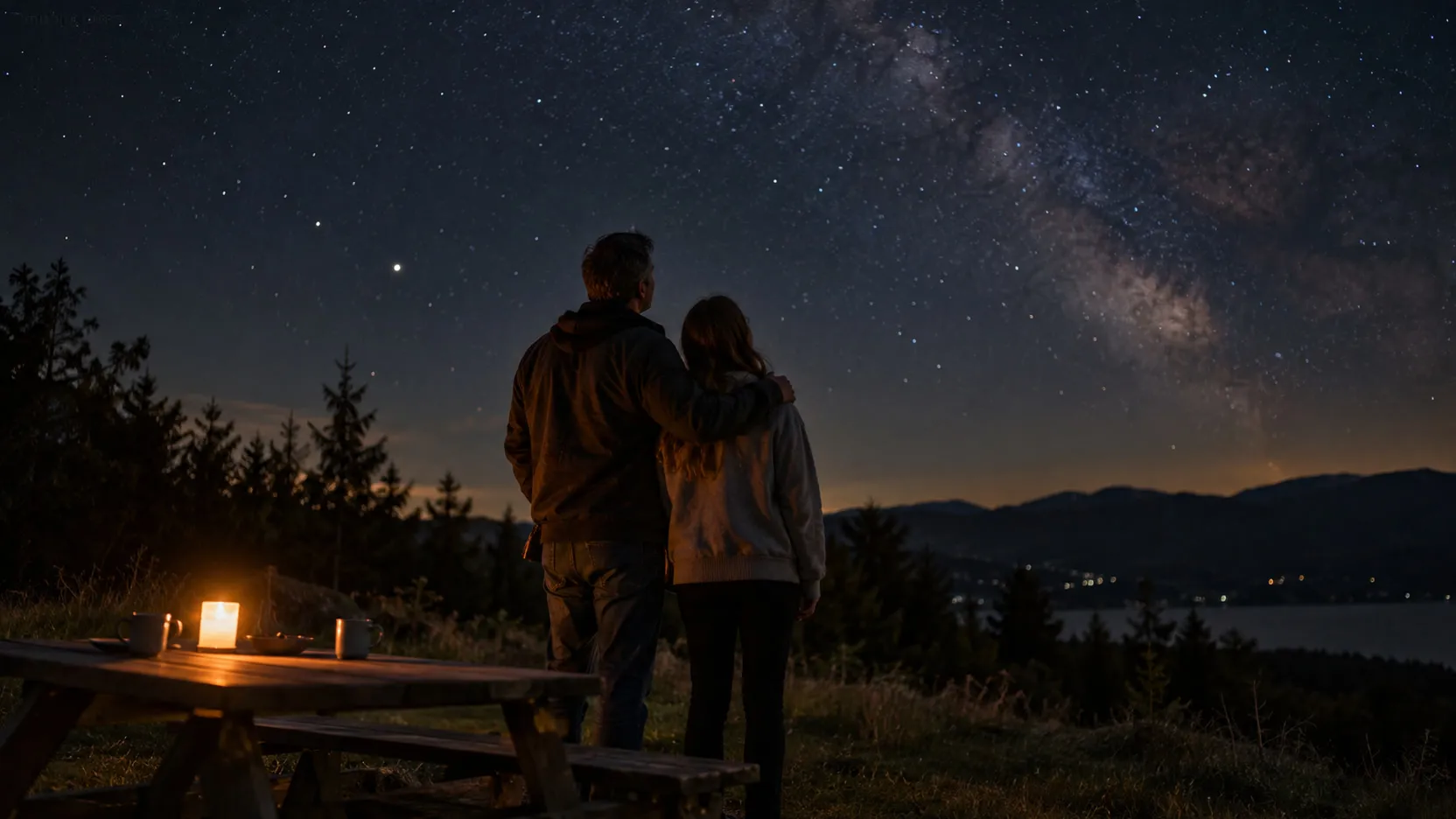
Elder Gerrit W. Gong of the Quorum of the Twelve Apostles asks us to picture a small scene. You’re packing for a wilderness hike, and you light a single candle before you start laying out the maps, the food, the sleeping bag, the tent. With the room’s lights on, you never notice the candle. Then you switch the lights off, and the candle fills the room.
“It was not that the lit candle was invisible before, it was that the room’s artificial light obscured the lit candle’s natural light.”
It’s the quietest image in the workshop on faith in an age of AI that The Church of Jesus Christ of Latter-day Saints released in June 2026, and I think it may be the most practical one. It says that the light we’re missing usually isn’t missing. It’s outshone.
The noise you stopped hearing
He pairs it with a sound: “Only when we turn off the kitchen fan do we remember how noisy it is.”
The room light and the fan work the same way. The trouble isn’t that they’re bright or loud. It’s that we stop noticing them. Elder Gong cites the size of our own lit room. Studies estimate, he says, that “US adults average five to six hours a day on our phones, computers, and televisions,” and that “teenagers spend eight to nine hours a day engaged with their screens.” He repeats an old warning from inside the technology industry: “If you’re not paying for the product, you are the product.” Much of what fills our screens, he notes, is tuned for use, sharing, and advertising profit. “Also telling,” he adds, “is that the tech gurus who most understand the tech protect their children from excessive social media use.”
I build an app, so I owe you a plain word about which kind I’m trying to build. Anything that measures its success in your minutes is room light. That’s why UNA has no streaks, why its reflections answer once and stop, and why it’s funded by subscriptions instead of advertisers. Your attention isn’t what’s for sale. The best thing any app can do in this part of Elder Gong’s counsel is get out of the way.
A Bortle 1 night
Then he tells about turning the lights off for real. He and Sister Susan Gong traveled to a national park known for its certified dark skies. Stargazers grade the night on the Bortle scale, from Class 9, the washed-out sky over a city, down to Class 1, the darkest there is. Elder and Sister Gong were in Class 1 or 2, on a moonless night. “We put away our phones, roasted marshmallows as the sun set, and watched the Milky Way through the night.”
“Don’t you love how every culture and people tells their own story of the Milky Way?” he asks. It’s the Silver River in Chinese, and the Way of the Birds in Belarusian, Estonian, and Finnish. Some call it the Road to Santiago. In Cherokee it’s the Way the Dog Ran Away, and in Hebrew the River of Light. Every one of those names came from people who could look up and see it. Many of us can’t anymore. A 2016 world atlas of light pollution found the Milky Way hidden from more than a third of humanity, including nearly 80 percent of North Americans. So the candle is more than a metaphor. The lights we built really are hiding the sky.
Out there, he says, we can see God’s light “not as a single candle, but, as E.B. White put it, as ‘the combustion of stars.’”
What a chatbot can do out there
Elder Gong isn’t against the technology here, and he asks the question directly: “Can we use AI to deepen experience with nature? Yes.” A chatbot can suggest hikes, identify a plant or an insect, make a scavenger list for the kids. “But the real exploring happens when we go exploring.” The patience, humility, and joy that nature teaches “are not downloaded, they’re lived.”
He’s candid about the cost in the other direction, too. The natural world in his counsel includes the literal ground under the servers: data centers that “require significant amounts of land, electricity, and water,” and supply chains that mine rare earth minerals. He asks for wisdom and care for creation as all of it expands. In his telling, reverence for the earth isn’t a separate subject from technology. It’s one of the costs we’re asked to count.
A mountain day, kept
When he can’t get outside, Elder Gong says, he reads John Muir. He quotes Muir’s entry for June 23 in My First Summer in the Sierra: “Oh, these vast, calm, measureless mountain days, inciting at once to work and rest! Days in whose light everything seems equally divine, opening a thousand windows to show us God.”
Notice the order. Muir went out first. He lived the day, with no device and no audience, and then he wrote it down. The notes from his summer of 1869 became a book, and more than a century and a half later an apostle read that page aloud to the world. The day came first; the record kept it alive. That’s the only kind of keeping I believe in: one true sentence after the living, never instead of it. It’s the same order that runs under the record of the living.
One evening this week
Elder Gong’s fourth invitation is the whole practice, and it’s short: “spend meaningful time in nature. Silence your notifications. Offer a prayer of gratitude for the beauty and testimony of all the things that denote the natural order and the loving purposes of God, the Great Creator.” Earlier in the workshop he says it the way the internet does: “please make time to ‘touch grass.’”
Here’s one way to take him up on it. Pick one evening this week and find the darkest place you can reach: a park at the edge of town, a hill outside it, your own backyard with the porch light off. Leave the phone inside, or silence it and keep it in a pocket. Give your eyes longer to adjust than feels necessary, because more stars appear the longer you wait. Offer the prayer he suggested. Don’t photograph any of it.
If a dark sky is out of reach, he offers smaller doors: “Watering a plant, nurturing a garden; they can restore equilibrium. It can uncrowd an apartment. It can unclutter a mind.”
This one needs no app, least of all mine. If you’d like to keep something from the evening, write one sentence about it when you come back inside. That’s enough.
The candle was burning the whole time. Turn off a light and look.
UNA is an independent project — made by one member, for members — and is not built, reviewed, or endorsed by The Church of Jesus Christ of Latter-day Saints. Quotes are from public teachings, shared with reverence; they are not endorsements. The workshop is on the Church’s YouTube channel, with a full transcript from the Church Newsroom.